Painting a Historic or Victorian Home: What North Shore Owners Need to Know
· By Marcio Ferreira
The North Shore is full of homes with real history: Victorians in Salem, sea captains' houses in Beverly, and older homes that have stood through more than a century of New England weather. Painting one of these is not the same job as painting a house built in the 1990s. The materials are different, the prep is different, and the rules are different.
Older homes reward careful work and punish shortcuts. Original clapboard, layered old paint, and decades of settling all change what has to happen before the first coat goes on. This guide covers what owners of historic and Victorian homes on the North Shore should understand before hiring anyone, from lead-safe prep to why the timeline and the labor are longer than you might expect.
Lead-Safe Prep on Pre-1978 Homes
If your home was built before 1978, there is a good chance the older paint layers contain lead. That is not a reason to panic, but it is a reason to take the work seriously. Federal RRP rules exist because sanding and scraping lead paint the wrong way spreads dust that is genuinely harmful, especially to kids.
Lead-safe work means containing the area, using the right prep methods to avoid airborne dust, and cleaning up thoroughly so nothing is left in the soil or on the porch. On a historic North Shore home, this is one of the first questions to ask a contractor. Anyone painting an older home should be prepared to talk you through how they handle older paint safely, not brush the question aside.
Protecting Original Clapboard, Trim, and Detail
The character of an old home lives in its details: the clapboard, the trim, the brackets, the porch spindles, and the carved woodwork that a modern build simply does not have. Once those pieces are damaged or replaced with generic stock, the home loses part of what makes it special, and it is expensive to get back.
Good work on a historic home is gentle. It means scraping and sanding carefully rather than aggressively, working around delicate detail by hand, and repairing original wood where it can be saved instead of ripping it out. The goal is to protect the features that give the house its value while still getting a durable finish. That patience is a big part of what separates someone who paints old homes from someone who only paints new ones.
Period-Appropriate Color
Color choices carry more weight on a historic or Victorian home. A period-appropriate palette, often a coordinated body color with contrasting trim and one or two accent colors on the detail work, is what makes a Victorian read as a Victorian. The wrong colors can flatten a house that was designed to show off its trim.
You do not have to copy a museum, and personal taste matters, but it helps to choose colors that respect the era and the architecture. Historic districts in some North Shore communities also have their own guidelines on exterior colors, so it is worth checking local rules before committing. A contractor who has painted older homes can help you land on a scheme that honors the house and still feels like yours.
Why Old Homes Need More Scrape, Prime, and Caulk Hours
Here is the part that surprises people. On a newer home, most of the surface is sound and the job is mostly clean, prime the bare spots, and paint. On an older home, decades of paint have built up, cracked, and started to fail in different ways across the house. Some areas are solid, some are peeling, and some need to be scraped back to bare wood.
That means far more hours of scraping, sanding, spot-priming bare wood, and caulking gaps and seams before any finish coat. This prep is the entire reason a historic paint job lasts. Skipping it is why a rushed paint job on an old house can start peeling in a year or two. When someone quotes a historic home the same way they quote a new one, that is a warning sign that the prep is being shortchanged.
Real Experience With Older Homes
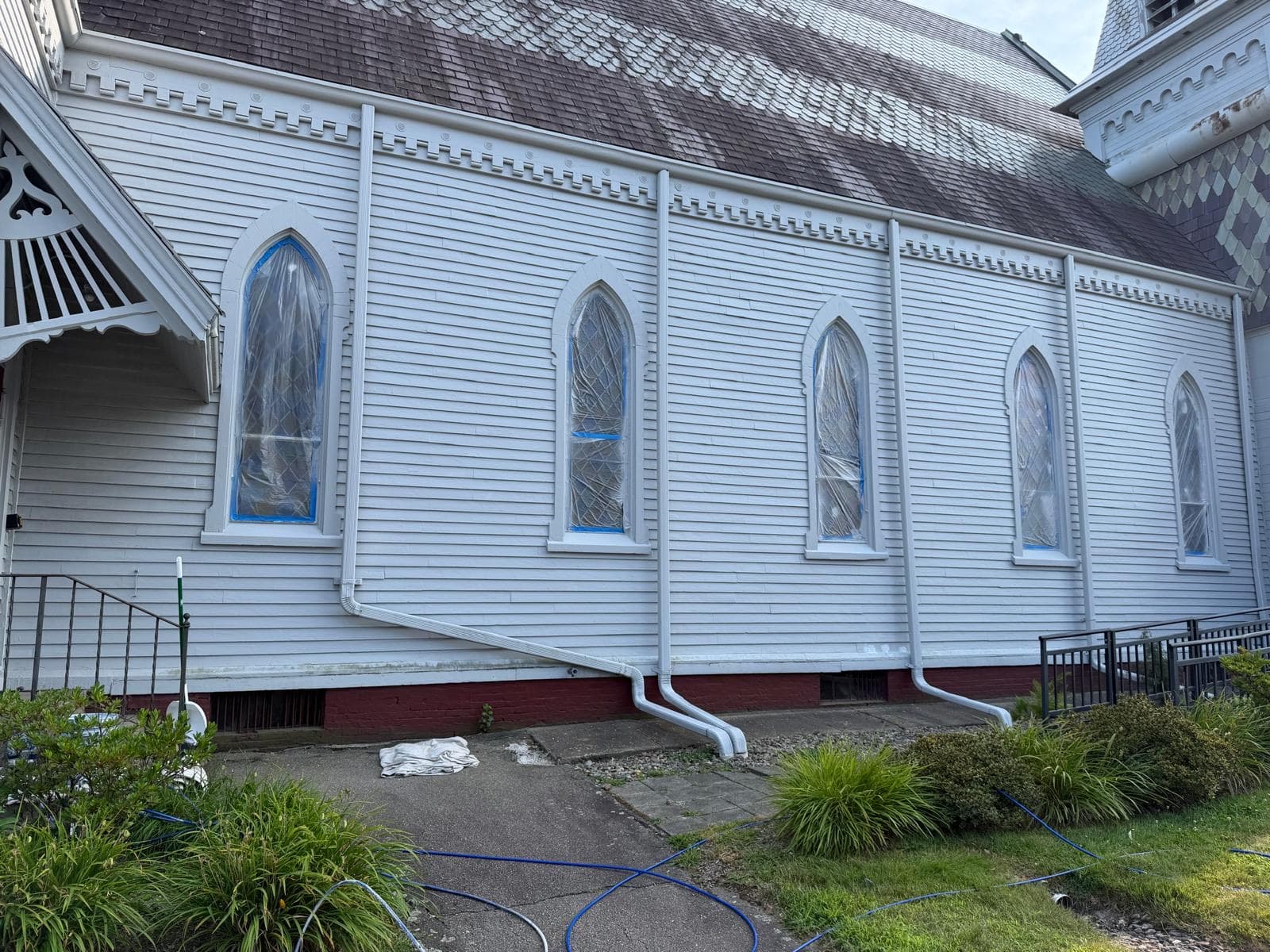
This is work MF Remodeling Services genuinely knows. Marcio Ferreira and his crew have painted a historic church exterior and worked on Victorian homes, the kind of projects that demand patience, careful prep, and respect for original detail. That is not a line on a brochure, it is real experience with the exact challenges an older North Shore home presents.
A church exterior and a Victorian are among the more demanding paint projects out there: tall, detailed, weathered, and unforgiving of shortcuts. Having done that work means understanding how to protect fragile trim, how to handle layered old paint, and how to set a realistic timeline for a house that has been standing for a hundred years or more.
Getting It Done Right
A historic home is worth doing carefully because the results, good or bad, last for years and affect the value of an irreplaceable house. The right approach is honest prep, lead-safe methods, protection of original features, and a color plan that fits the architecture.
If you own an older or Victorian home on the North Shore and want it painted by someone who has actually done this kind of work, the best first step is a free in-home estimate. One crew handles the whole job, the site stays clean and on schedule, and you get a straight assessment of what your home needs before any work begins.
Frequently asked questions
- Is it safe to paint a home built before 1978?
- Yes, when it is done with lead-safe methods. Older paint layers on pre-1978 homes often contain lead, so the work needs proper containment, dust control, and cleanup under federal RRP practices. Done correctly, it is safe for your family and your yard. Always ask a contractor how they handle older paint before hiring.
- Why does painting an old home cost more than a newer one?
- The difference is prep. Older homes have decades of layered paint that has cracked and failed in different spots, so they need far more scraping, sanding, spot-priming, and caulking before any finish coat. That prep is what makes the paint job last, and it takes many more hours than a newer home with sound surfaces.
- Do I have to use historically accurate colors on a Victorian?
- You are not required to, and personal taste matters, but period-appropriate colors are what make a Victorian look its best, using a body color with contrasting trim and accent detail. Some North Shore historic districts also have color guidelines, so it is worth checking local rules first. A contractor experienced with old homes can help you choose a fitting scheme.
- How can I tell if a contractor knows how to paint historic homes?
- Ask about their prep and their experience. Someone who knows old homes will talk about lead-safe methods, careful scraping, protecting original clapboard and trim, and a realistic timeline, not a fast quote. MF Remodeling Services has painted a historic church exterior and worked on Victorians, which is real, relevant experience with these challenges.
- How long does a historic exterior paint job last?
- It depends heavily on the prep and the weather exposure, but a properly prepped exterior paint job on an older home can last many years. The single biggest factor is the scraping, priming, and caulking done beforehand. A rushed job that skips prep can start peeling within a year or two, which is why the prep hours matter so much.
Related services
Serving
Ready for an exact price?
Get a free, no-pressure in-home estimate. Real numbers for your home, not a phone guess.